
Robert Glenn Ketchum
(Los Angeles, California, 1947 - )
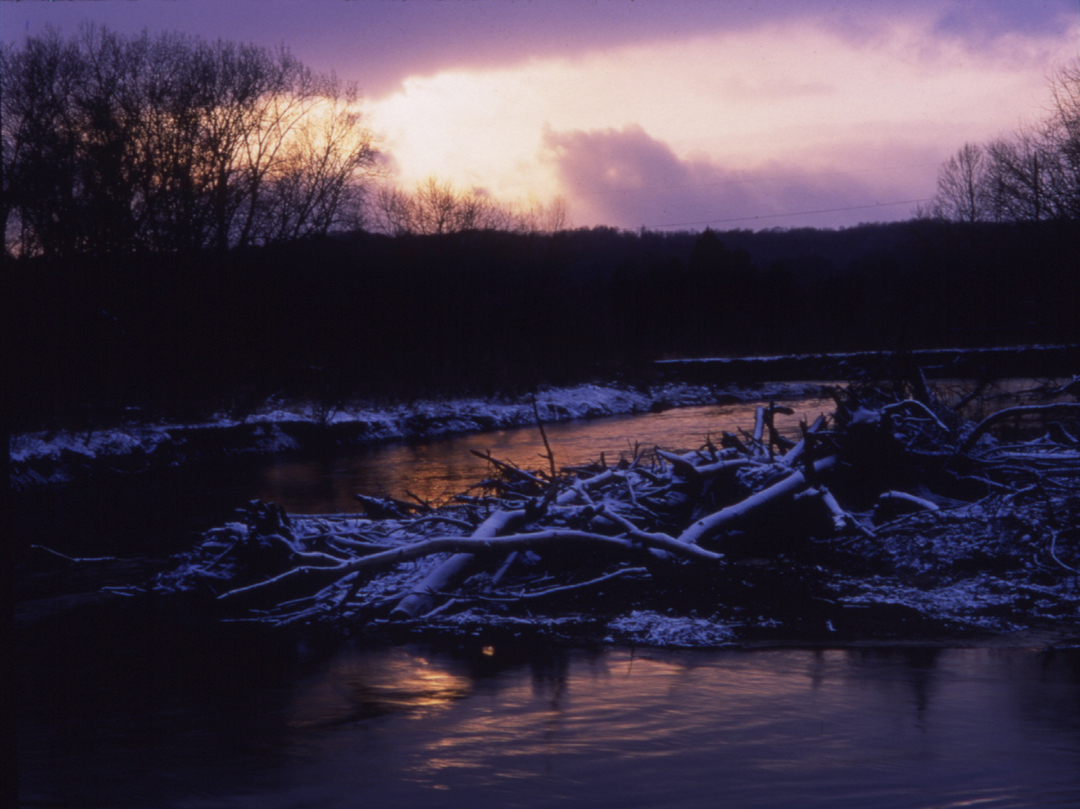
CVNRA #813, from the Federal Lands series
1988
Cibachrome print
20 x 24 in. (50.8 x 61.0 cm)
Collection of the Akron Art Museum
Purchased with funds from The GAR Foundation
1989.41
© Robert Glenn Ketchum
More Information
In 1986, the Akron Art Museum commissioned Robert Glenn Ketchum to document the Cuyahoga Valley National Recreation Area (CVNRA) as a follow-up to Lee Friedlander's "Factory Valleys" series. Ketchum photographed the CVNRA cover several years and in every season, capturing both the area's natural beauty and the evidence it provides of the complex, sometimes troubled relationship between humans and nature. The Cuyahoga River has a history of being a dividing line. It was once the western boundary of the US, separating colonial settlement from Native American territories. A river is dynamic. Fast moving water is strong and can quickly move rocks or trees out of the way. Slow moving water has less power. Water seeks the path of least resistance, going around piled up branches, while slowly moving them. There is a contrast between the curve of the river and the straight line of the power or telephone line and the road or railroad track in the distance. The river created a path that wildlife follow, and that humans respond to by building canals, train tracks, and roads in the open valley carved by the river.