
Artie Vierkant
(Breinerd, Minnesota, 1986 - )
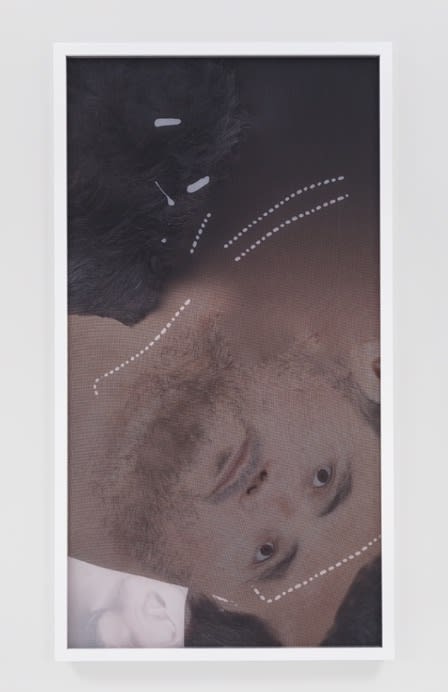
Air filter and method of constructing same 31 (Antoine) (Exploit)
From the series "Exploits"
2014
US Patent 8118919 B1, aluminum, print on charcoal fiberglass mesh, print on organza, artists frame
84 x 46 in. (213.4 x 116.8 cm)
Collection of the Akron Art Museum
Gift of a Private Collection, USA
2025.11.1
More Information
Artie Vierkant’s engagement with patents represents a significant aspect of his artistic practice, particularly within his “Exploits” series, which intersects with his better-known “Image Objects” series. His use of patents reflects his interest in questioning intellectual property, authorship, and the relationship between digital and physical manifestations of art. In his “Exploits” series, begun in 2013 and continuing into the present, Vierkant “purchases or licenses varying types of intellectual properties to use as materials in his work.” A critical component of this series is “the permissions and direct involvement of the individual or corporate entities from whom the intellectual property originates.” Previous works in this series have involved “obtaining the right to manufacture objects based on existing patents.” The matching portion of the titles of these two works—Air filter and method of constructing same—directly references patent language, which typically uses standardized, technical phrasing to describe inventions. Vierkant draws attention to the legal frameworks that govern ideas and their material manifestations. Rather than just referencing or representing intellectual property, he incorporates licensed patents as raw material for his art. This approach transforms abstract legal concepts into tangible artistic objects. The intention behind this strategy is to create objects that don't just represent ideas or symbols but embody and contain the intellectual concepts themselves—making the ideas physically real rather than just pointing to them. Through this approach, Vierkant “opens a broader conversation about the informational systems and structures governing our immaterial and material experience.