
Unspoken Language: Isamu Noguchi
FirstEnergy Lobby and Bud and Susie Rogers Garden
November 14, 2026 – September 5, 2027
Isamu Noguchi lived a life of artistic experimentation, creating sculptures, gardens, ceramics, architecture, landscapes, and designs for furniture, lighting, and theatrical sets. Inspired by the natural world, he looked to worn stones, seedpods, and the curves of the human body as starting points for his sculptural language. Throughout his innovative career, he explored unexpected combinations of forms, materials, and ideas.
Born in Los Angeles in 1904 to Japanese poet Yone Noguchi and American editor and journalist Léonie Gilmour, Noguchi spent his early life with his mother in Japan, where he apprenticed with a local carpenter. He later studied with sculptor Constantin Brancusi in Paris for seven months before returning to the United States to pursue his own artistic career. During World War II, Noguchi voluntarily spent seven months in a Japanese American incarceration camp, where he designed landscape-inspired sculptures, playgrounds, and gardens. Throughout the rest of his life, he worked across a wide range of media, creating innovative threedimensional works until his death in 1988 at the age of eighty-four.
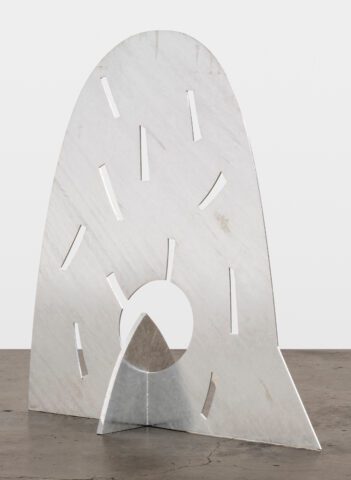
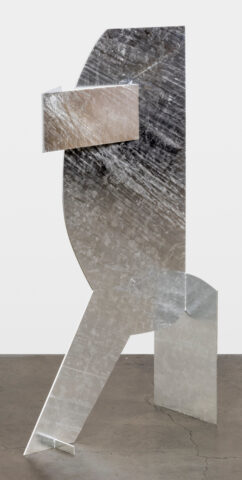
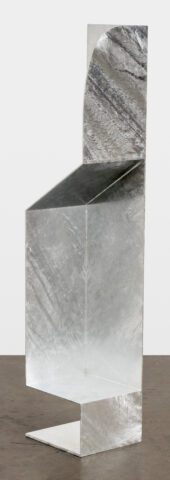
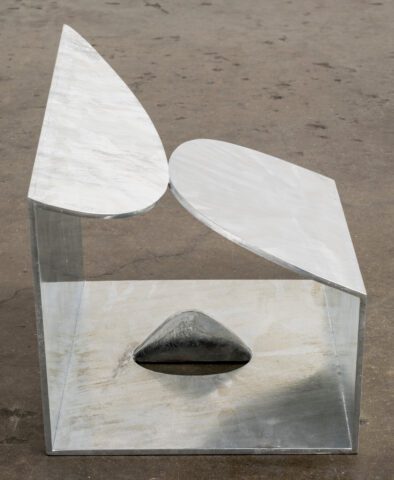
From 1982 to 1983, Noguchi created a series of twenty-six galvanized steel sculptures with Gemini G.E.L., a fine art workshop based in Los Angeles. Each was fabricated from a single sheet of steel using a hot-dip galvanizing process, in which the metal was submerged in molten zinc to create a richly textured surface resembling pebbles in a stream or the texture of skin. As the sculptures age, they continue to develop a patina, embodying Noguchi’s belief that human bodies, natural cycles, and even abstract concepts are all subject to change. The Akron Art Museum is borrowing thirteen sculptures from this series. Ten will be displayed indoors in the Museum’s FirstEnergy Lobby, and three will be on view in the Bud and Susie Rogers Garden, activating the outdoor space in a new and engaging way.
Noguchi had a lifelong connection to dance. In addition to sculpting portraits of dancers, he collaborated with choreographer Martha Graham for more than thirty years, creating sets and backdrops for many of her groundbreaking performances. Programming for this exhibition will invite visitors to experience the Museum’s indoor and outdoor spaces in engaging and creative ways through specially designed tours and movement prompts.